
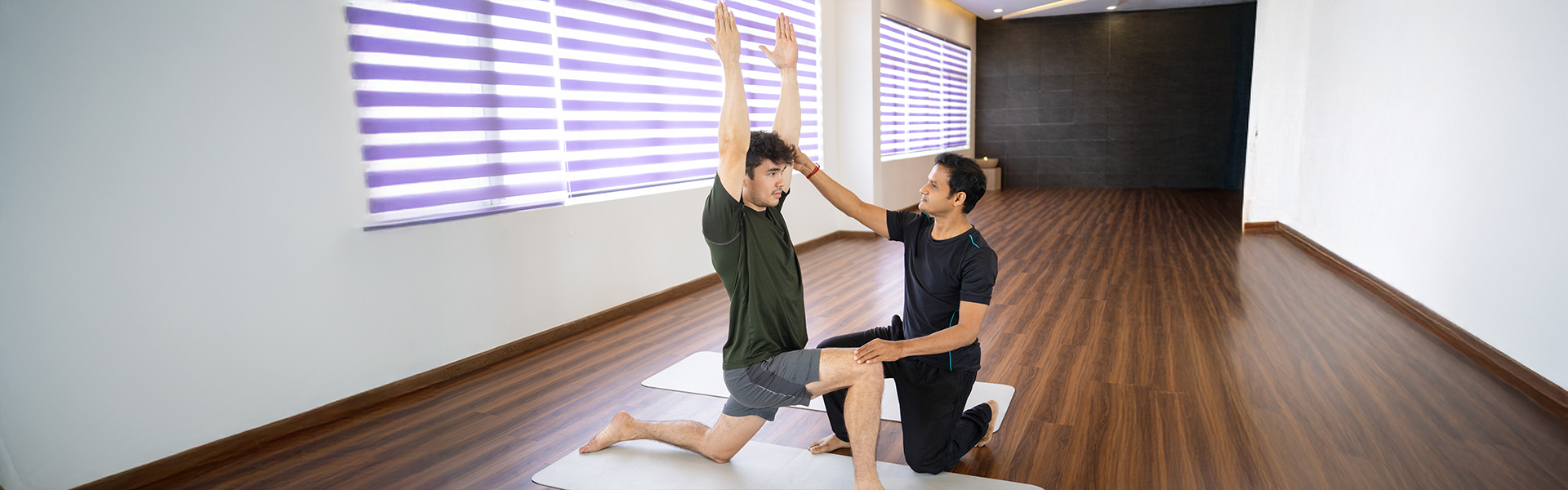
Why Chiropractic Stretching Works Best with Spinal Adjustments
Consultation begins with examination of vertebral position, soft tissue tone, and nerve sensitivity. Individuals who see a chiropractor in Inglewood often present with restricted spinal segments and surrounding muscle contraction. When alignment shifts, nearby tissue tightens to guard the joint. That guarding increases compressive load on cartilage and may irritate small nerve branches.
The first step is to determine whether symptoms stem from joint restriction, muscular imbalance, or structural degeneration. The palpation and motion testing guide that decision. If inflammation is evident, correction is introduced cautiously to avoid stressing healing tissue.
How Spinal Adjustments Restore Alignment
Segmental testing identifies areas where adjacent vertebrae fail to glide normally. A specific corrective force is delivered to improve movement between those bone surfaces. Releasing fixation reduces pressure inside the joint capsule and decreases strain on supporting ligaments.
Restored mobility allows weight to distribute more evenly through the spine. These practical spinal alignment benefits are confirmed through follow-up motion assessment. Reduced joint stiffness often leads to less reflex muscle guarding.
Force selection depends on structural findings. If imaging suggests limited bone density or disc thinning, the approach shifts toward low-force mobilization. Stability takes priority over speed of correction. After each adjustment, joint response and nerve irritation are reassessed.
Why Muscles Must Be Stretched After Alignment
Muscle fibers adapt to chronic misalignment by shortening. Even after the joint position improves, residual tightness can pull the vertebra back toward its previous position. Targeted therapeutic stretching lengthens those contracted fibers and restores balanced tension across the joint.
Improved blood flow supports oxygen delivery to muscle and fascia, which assists normal tissue repair. Reduced tightness lowers compressive force on discs and facet joints.
Stretch depth is selected according to tissue tolerance. If swelling increases or nerve sensitivity remains elevated, intensity is reduced. The objective is gradual muscle tension relief without provoking strain or delaying healing.
How Stretching Supports Long-Term Back Pain Relief
Repeated mechanical stress can weaken ligament support and irritate spinal nerves. Adjusting alignment addresses joint restriction, but an untreated muscular imbalance may reapply uneven load across the vertebrae.
Care planning for back pain treatment includes reassessing disc pressure, joint stability, and muscle symmetry. Stretching decreases asymmetrical pull and helps limit disc compression.
Clinical decisions consider:
- Degree of ligament integrity
- Evidence of disc degeneration
- Level of nerve involvement
- Rate of tissue recovery between visits
If bone support appears limited, strengthening exercises are introduced slowly to avoid overload. Ongoing evaluation determines whether alignment remains stable under normal daily activity.
The Combined Benefits of Alignment and Flexibility
Joint correction alone may not hold if the surrounding tissue remains tight. Coordinating adjustment with stretching improves the likelihood that alignment remains stable during movement.
Manual correction restores motion at the restricted segment. Stretching reduces residual contractile force that could shift bone position again. In certain cases, additional soft tissue preparation, such as massage therapy in Inglewood, may be coordinated to decrease dense fascial restriction before mobilization.
Each intervention addresses a specific physiological factor:
- Improve vertebral glide
- Reduce mechanical compression on nerves
- Enhance circulation within connective tissue
- Support stabilization during the healing phase
Response is checked after every visit. If new neurological symptoms appear, force and frequency are reduced immediately.
What to Expect During a Chiropractic Visit
Examination includes posture analysis, segmental motion testing, and neurological screening. Reflexes, muscle tone, and joint stability are documented. Imaging may be recommended if fracture, infection, or significant degeneration is suspected.
When correction is indicated, a controlled vector of force is applied to the affected joint. Surrounding musculature is then lengthened to minimize recoil tension. Tissue reaction is observed before additional correction is performed.
Home guidance may include low-load stretching to prevent shortening between visits. Visit intervals depend on joint stability, nerve response, and visible healing. Care is reduced once alignment holds without excessive muscular guarding.
Final Thoughts
Skeletal alignment and muscular balance function together. Correcting vertebral restriction reduces abnormal joint pressure. Lengthening contracted tissue limits uneven pull on bone and decreases nerve compression.
Treatment decisions are based on observed tissue healing, structural integrity, and measured joint motion. At South Bay Wellness Center, alignment and flexibility are coordinated with continuous reassessment to protect healing structures and support spinal stability.